
Unexpected folklore research, very solid riffs, zero regrets.
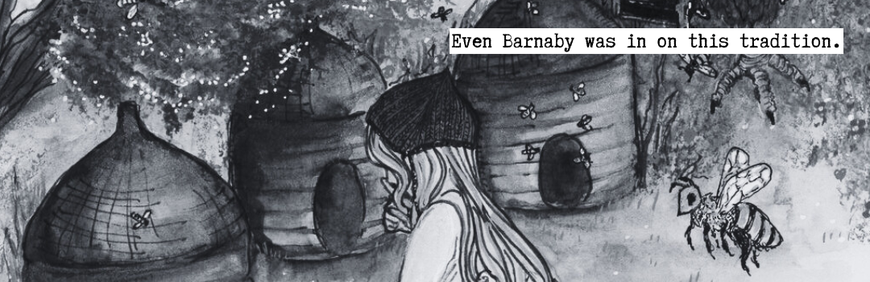
Today started normal and somehow ended with me elbow-deep in bee folklore.
I swear, I can’t be trusted with the internet.
I’m a little bit hyped right now—because once again, I got slapped in the face by how weird and wonderful this whole blog thing has become. Like—I genuinely never thought I’d end up here.
People send me music. Trust me with it.
And I get to write about it.
That still blows my mind.
So bear with me while I have a tiny moment about it.
Because when I started this blog four years ago?
I had no plan. No clue. It was just me and Google, staring each other down.
Yeah. Google. Not even ChatGPT back then.
I had to google bands to have something to write about.
There even was a spreadsheet.
It was excruciating.
But somewhere along the way, something shifted.
I stopped writing about "important" albums.
I started writing about the ones that moved me.
And once I did that—music started finding me.
Every once in a while now I am being handed new songs, new albums, new artists.
And it makes me stupidly happy.
Because it means something’s working.
It means someone out there thinks I might actually get it.
That feeling? Never gets old.
So when a Bastion's Wake's upcoming release Go Tell The Bees landed in my inbox yesterday, I had one of those soft little awww moments—you know, that "thank you, mysterious internet souls, for trusting me with your art" kind of feeling. And then, about three seconds later, my brain did what it always does.
Go Tell The Bees.
Excuse me, what?
And sure enough, down the rabbit hole I went.
🐝 What’s With the Bees?
It's in the title.
It's in the cover art.
It's in track three (Don't) Tell The Bees.
And I had no fucking idea what it meant.
Which always rubs me the wrong way.
So I googled. Yes. Again. Me and Google—back at it.
This is just how blogging works when your brain is powered by mild obsession and poorly regulated dopamine. I’m supposed to be writing about the music—and next thing I know, I’m reading up on beekeeping customs and mourning rituals.
Because apparently, "telling the bees" is an actual thing. A real tradition.
In parts of Europe (and in very dramatic episodes of Midsomer Murders, as it turns out), it was once common practice to literally inform your beehives when someone died. Or anything else in the family drastically changed. You’d go out to the hive, tap it gently, and whisper the news—a death, a birth, a marriage.
And if you didn’t? The bees might fall silent. Or leave. Or die.
It’s somewhere between folklore and grief ritual—a gesture of respect that treats nature not just as witness, but participant.
And here’s the kicker: I’ve seen this before.
In Midsomer Murders.
Multiple times.
It comes up in The Killings at Badger’s Drift (episode one, no less!) —and again in The Sting of Death.
I am a full-blown Barnaby groupie. I rewatch that show like it’s a comfort blanket.
And somehow I still didn’t clock the reference.
So now I’m researching a tradition I already technically knew, yelling at my past self, and queuing up Badger’s Drift for another rewatch.
And suddenly, the album title Go Tell The Bees hits different.
It sounds soft, poetic, almost whimsical—until you realise what it’s really doing.
This isn’t a cute metaphor.
It’s a warning. A eulogy. A confession.
We are dealing here with death unspoken, grief unnamed, guilt avoided, memory held close like a secret.
Who Are These People and Why Should You Care?
"Prog-power-black metal, with a kiss of doom."
That’s how Bastion’s Wake describe themselves on Bandcamp—and honestly? Fair play. That’s exactly what this album sounds like. Although black metal is more waving politely from the distance while the epic metal does the talking.
The band formed in 2016, built on the wildly different musical instincts of Sami Hunter and Ray Hunter.
Sami brings soaring, doom-laced vocals and a 12-string guitar. Ray brings the tech brain, the symphonic power metal riffs, and the kind of nerdy enthusiasm that suggests he’s spent serious time wondering what kind of pickups Aragorn would use.
Their debut, Sea Creatures and Sky Pirates, dropped in 2019 and earned some serious underground acclaim—but momentum screeched to a halt in 2020, when Ray suffered a heart attack. At thirty. He was clinically dead. Revived. It changed everything.
Now, joined by drummer Rob Westbrook and his son Ben on bass, the band have picked up where they left off—and come back swinging.
This time, they really wanted to go bigger. They brought in Øystein G. Brun (Borknagar, Crosound Studio) to handle mixing and mastering—because when you’re working with Freddie Mercury stacks of harmonies, walls of synths and guitars, and a full live kit—you need someone who knows how to glue it all together.
They launched a Kickstarter, and funded their new album in just ten days—smashing through to 210 % of their original goal.
From Rain to Defiance in 39 Minutes
Okay. So the album starts with rain. Literal rain.
Not a metaphor. Just actual rain sounds. And a guitar melody.
It’s called Motanka. Which is a Ukrainian protection symbol. So yeah—we’re not easing into this. We’re already in ritual territory and nobody’s even sung a note yet.
Then the first actual track kicks in—Willow’s Ruse.
And the shift is immediate.
There's a very very sublte atmospheric black metal haze to it until Sami’s vocals hit and we’re straight into soaring epic territory. And I’ll be honest: female, clean, operatic-leaning vocals usually lose me in the first verse.
But Sami doesn’t just soar—she swerves.
Hits the high notes, then punches straight through with something rougher. It’s not just pretty. It lands.
Also—side note—I would like to formally thank the drummer for the subtle blastbeats. Like, who does that? Who whispers blastbeats into a track? Rob, apparently.

The whole album has a very epic feeling—not just in sound, but in the way the songs carry themselves.
Some of the verses unfold with a proper narrative arc, and the choruses don’t just repeat—they open up, like actual melodic interludes. It’s got that Dio feel, not in the tone, but in the structure. Like someone sat down to tell you something, not just throw riffs at you.
Don’t Tell The Bees is where that really clicked for me.
I latched onto this one instantly. It feels familiar in the best way—classic heavy metal at its core, but with something darker braided through. Sami’s vocals are sharp and controlled. There’s weight behind them.
The pacing throughout the album shifts constantly. One track starts off slow and dreamy, almost a bit gazey, and then later you’re in a full-on power metal intro—guitars crashing, vocals soaring, keys going off.
But then, just when you think you’ve got the pattern, something darker slips in—a bit of downtuned doom, a bassline like it's got something to say, or a subtle blastbeat tucked behind the melody. There’s grit in the vocals, even in the cleanest parts. The whole thing is wonderfully balanced. It's textured. Built. Every track carries itself differently, but nothing feels out of place.
Some songs are all shimmer and wind. Others make you want to scream-sing in a clearing.
Pathos has actual raindrop sounds layered under the piano and vocals.
And then—just casually—it hits you with doom guitar moments like a plot twist.
And then—Nimue.
King Arthur legends now. The Lady of the Lake.
Bit of a curveball thematically—but honestly? Why not.
It’s soft. Stripped down. Rooted in fantasy again.
Just vocals and atmosphere and this creeping, ancient kind of grief.
It doesn’t need to explain itself. It just lingers.
Because right after that?
The album punches you in the chest with Sunflower.
And holy hell, it does not hold back.
This is a war song.
It’s fists in the air. It’s teeth bared. It’s real.
And it’s not just a gesture. The band has been actively supporting Ukrainian medical relief since 2022—raising funds, building community, taking a stand that goes far beyond the studio.
This song isn’t abstract. It’s rooted.
The bees are back. Not to mourn—to witness.
To remember.
To carry something forward.
Consider The Bees Told
Go Tell The Bees isn’t just a concept album.
It’s not just cinematic or heavy or mythic or sad—though it’s all of those things.
It’s an arc. A reckoning. A ritual.
It begins with helplessness—the quiet plea for protection, whispered out into the rain.
Then comes despair—the soft collapse, the stories we bury, the ones we can't bring back.
And finally, action—not clean, not triumphant, but necessary.
A decision to stand. Even if it hurts. Especially if it hurts.
Because grief and hope aren’t opposites here. They’re companions.
And this album walks with both.
From Prog-Power-Black-Metal to Badger’s Drift: A Journey
Now. While I absolutely enjoyed this, it’s still a kind of genre tourism for me—just not the corner of metal I breathe for.
But for what it is? It’s really fucking good.
And more importantly: it’s honest. It’s made by people who still make music like they mean it.
People who don’t just crank out content—they build albums.
The kind of artists who are wildly good at what they do, and still struggling to make that mean anything in a world that keeps moving the goalposts.
Bands like Bastion’s Wake deserve to be heard. And supported.
So go support them, if you can—so we get more of this.
More music that feels built. More albums that actually try.
Anyway.
I’m off to rewatch Badger’s Drift now because apparently even Barnaby was in on this tradition and I missed it for twenty years.