A love letter to low frequencies
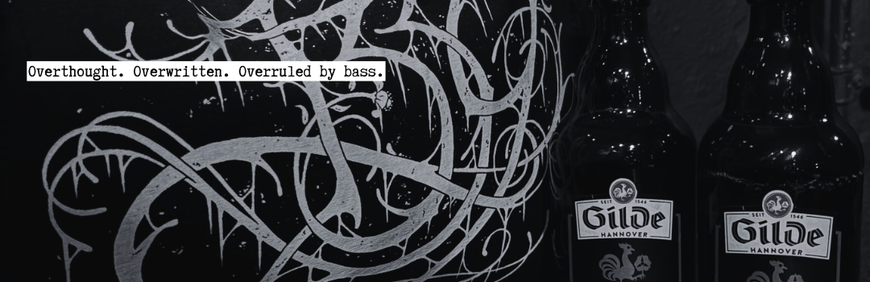
Doom on Valentine's Day. Is there anything better?
For a good number of people in Hannover that night, the answer was emphatically clear: Knorkator.
They were playing roughly 200 metres away from Café Glocksee that evening, over at the Capitol in Hannover. I didn’t know that yet. I had only meant to stop by the Irish pub around the corner for a quick bite. A pint. Mental and physical preparation for what I assumed would be a doom-laden Valentine's night. In the pub, however, I walked straight into a level of enthusiasm I had not emotionally prepared for.
It is barely 5 p.m. and every table is taken. Pints are already being consumed with impressive dedication. At the table next to me, two groups discover—with touching enthusiasm—that they were both "here for the concert" and promptly form what can only be described as a beer-fuelled alliance.
For a brief, deeply unsettling moment, I am convinced they are all on their way to see Bell Witch.
Which feels—statistically improbable.
Because—with all due respect—this does not look like a crowd preparing for an evening of Funeral Doom meets Dark Folk. This looks like confetti cannons and singalong choruses. One glance at the illuminated sign of the Capitol across the street thankfully restores balance to the universe. Relieved, I return to my pint and my plate—quietly observing what feels increasingly like a small-scale sociological field study. Outside, the queue in front of the Capitol keeps growing. Kutten, beer, anticipation.
Two concerts. Two emotional climates. So far I love everything about it.
Café Glocksee – No Neutral Ground
There is no queue outside Café Glocksee. At 7 p.m., the courtyard is still almost empty. The doors are closed. The air has that strange pre-show stillness. I use the quiet to look around.
And before I even get to the music, I need to say this: places like this matter.
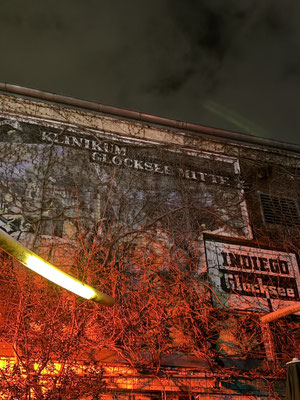
Café Glocksee is one of two event spaces on a site that could hardly be more alternative if it tried. A halfpipe shares the courtyard with a "Dumb Trump" statue and a metal dinosaur sculpture. No one here is pretending to be neutral. I appreciate that.
Yellow cable conduits stretch from tree to tree, glowing softly. Fat balls hang in between for the birds. Even the smallest residents are accounted for.
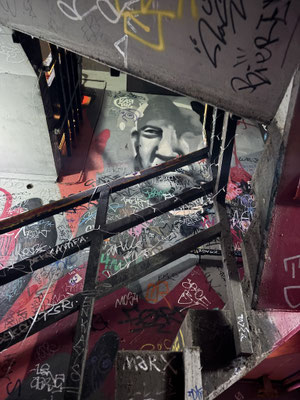
Posters and stickers are everywhere. On doors. On walls. On the cigarette machine. On the benches wrapped around the trees. Not a single centimetre is left untouched. Every surface has something to say. For good measure, I add my own sticker.
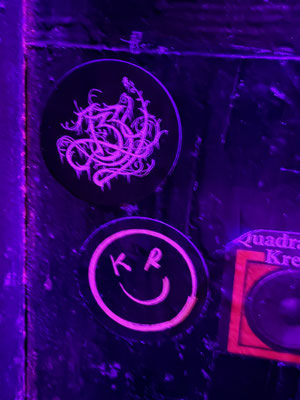
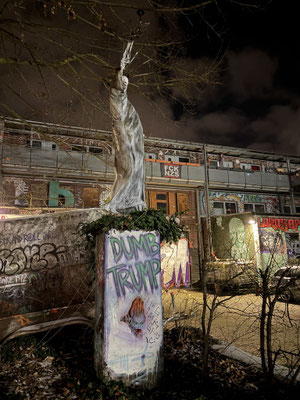




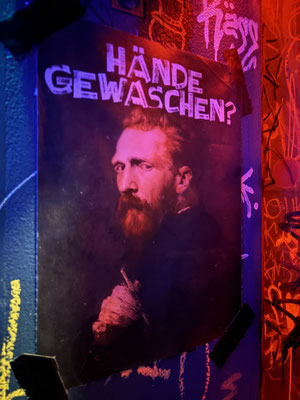

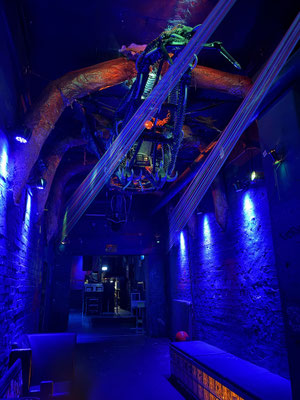
I pause at a tear-off sheet offering "Free Compliments" and at the sentence printed on the entrance door: "We do not tolerate national pride in our spaces."
That alone tells you exactly where you’ve landed.
Café Glocksee feels lived in—not curated. You sense it in the handwritten notes, in the slightly worn corners, in the unapologetic clutter. This is not aesthetic rebellion for Instagram. This is a space people actively use. A place where community matters. Where respect matters. Where showing up matters.
It’s the kind of venue you slip into like a pair of comfortable slippers after a long day—except these slippers smell faintly of sweat and idealism. At this point, I could hardly have been happier.
40 Watt Sun – Heartache, But Make It British

Patrick Walker steps onto the small stage with a slight delay—the reason: a queue at the men’s toilets.
Grounded.
He opens with Colours from the 2022 album Perfect Light. One man. One guitar. One microphone. That’s all it takes.
And immediately, that particular kind of silence settles over the room.
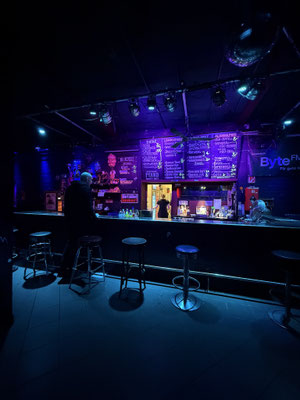
I don’t think this will ever stop feeling special to me. This non-Knorkator effect. Around 300 people in a room. No pushing. No phones raised. No elbows. Just stillness. So still that even behind the bar, bottles are opened with deliberate care. It’s shared silence. A collective willingness to lean into vulnerability. To actually listen. Without irony.
And yet, it never tips into theatrical melancholy. Walker knows exactly when to release the tension. After the opener, he looks up and asks, “How is everyone doing? Everyone okay? I don’t mean to bring the party down or anything.”
Collective laughter. A breath released. And on we go.
The sound needs a moment to settle. The guitar is slightly too loud at first, a touch too present. But by the time Pour Your Love from the current album Little Weight begins, everything clicks into place—just in time for the clear audience favourite, Stages. A few scattered whoops escape when the title is mentioned, which Walker immediately counters with a dry, perfectly timed, "Calm down."
At some point, I move to the side of the stage—and am promptly noticed.
"I always panic when I see people taking pictures of me from the side of the stage. You are free to use them, but crop out my tummy first."
Patrick, dear. Your tummy is fine. The only thing remotely heavy in this room is the collective heartache.
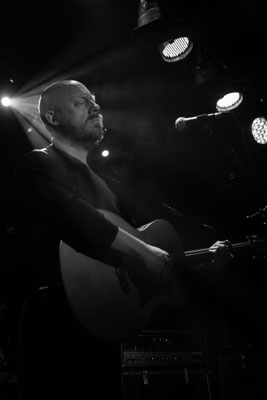
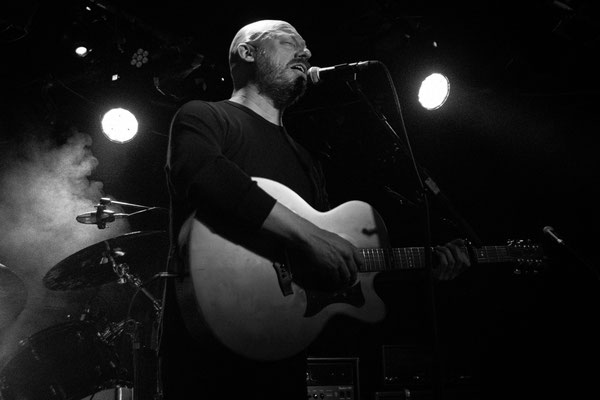
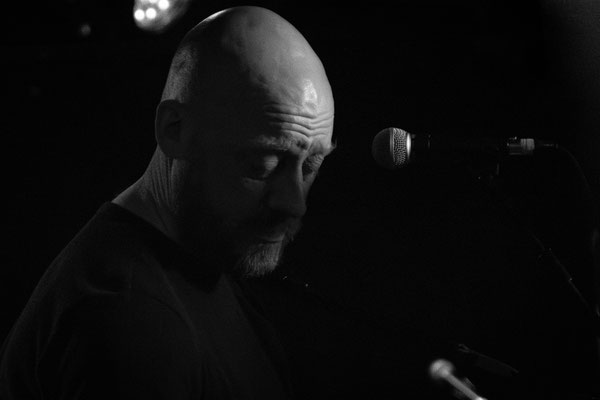
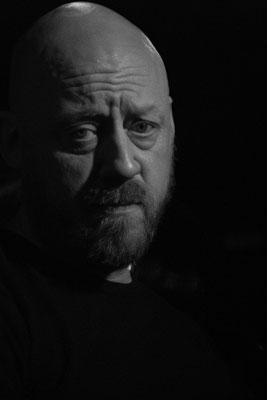
That wonderfully dry, slightly exhausted British self-deprecation makes Walker impossible not to like. It grounds the emotional weight of the songs. Between two tracks, he mentions that he will turn 48 in two weeks—but after his third tour in ten months, he feels closer to 88. Yes. I feel that.
With Carry Me Home and Marazion, the set comes to a close. A quiet, dignified opening chapter to a night that is about to shift into very different frequencies.
The Bell Witch Confession

Now. Stygian Bough. A collaboration between Funeral Doom duo Bell Witch and Erik Moggridge's acoustic neo-folk project Aerial Ruin. Their second album, Stygian Bough Vol. II, was one of my absolute highlight records of 2025. I reviewed it for Stormbringer. I loved it. Obviously. I bought a ticket for this tour without even pausing to consider logistics, sleep, or basic adult reasoning.
But do you know what I haven't written?
Yeah. A proper blog article about Bell Witch.
And let me tell you—not for lack of trying.
There are three (!) unfinished drafts sitting in my folder. Three! I have opened new documents with great conviction, typed passionate first paragraphs about their music, and then—nothing. Every time. I stalled. I overthought it into paralysis.
Why? I'll be damned if I know. Apparently, Bell Witch music short-circuites my vocabulary.
So yes. Writing this live report feels overdue. Like the bare minimum. The least I can do to finally tell you how fucking extraordinary this band is.
Stygian Bough – Doom, But Make It Physical
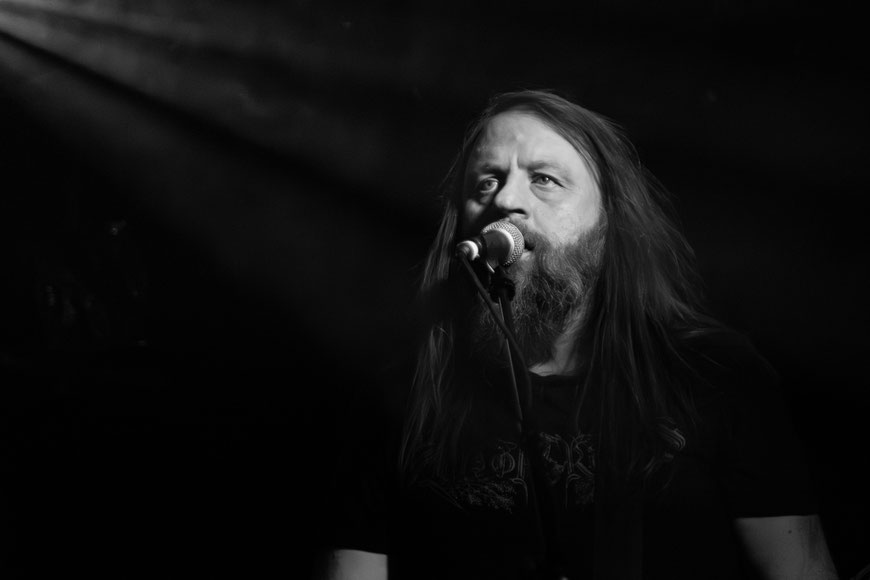
Right. So. Where was I?
40 Watt Sun have just finished their set. I feel content. But there’s a faint edge of tension underneath it. Because one quiet question is still lingering: Does this even work live?
Stygian Bough Vol. II is heavy. Slow. Deliberate. Yes, there are moments of light—but nothing here is buoyant. This is music I usually consume lying down. Headphones on. Alone. Not necessarily standing shoulder to shoulder in a crowded room. At least in theory.
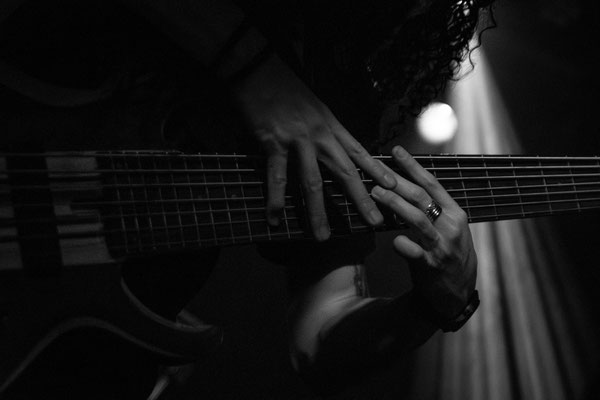
Then Dylan Desmond walks on stage with his seven-string bass. And I catch myself grinning. Slightly manic. The pedalboard is absurdly large. I find myself hoping—very sincerely—that this venue is structurally prepared for what is about to happen.
The first plucked note.
Doubt? Gone. Completely.
The moment it hits, I actually giggle. I do. Like a sixteen-year-old at a Backstreet Boys concert, I clap my hands over my mouth to contain a grin that threatens to split my face in two.
That sound.
I still don’t quite have language for it. It isn’t just loud—it’s everywhere. A low, rolling surge that doesn’t so much fill the room as displace it. The floor hums. My chest vibrates. Thought itself steps aside.
As Waves Became the Sky begins, the room disappears. Not metaphorically. Physically. The sound moves like a pressure wave. I don’t just hear it—I feel it. In the vibrating floor beneath my feet. In my stomach. My ribcage. My fingertips.
It is heavy, yes. Monumental. But never suffocating. That’s the strange thing. It doesn’t crush—it envelops. Like a weighted blanket you willingly crawl under. For a moment, there is nothing but sound.
Nothing about Stygian Bough is accidental. Every note lands exactly where it needs to. Every entrance is measured. I find myself staring at Desmond’s hands as he coaxes tones from that bass that seem to resonate in defiance of natural law. Jesse Shreibman keeps glancing over at him, placing each drum strike with surgical precision. Not one too many. Not one too few.
What does get partially swallowed in this wall of sound are the vocals. When Erik Moggridge sings alone—at the beginning of From Dominion, for instance—everything is clear, exactly as on the record. Once the bass enters, the frequency mass absorbs the voice.
Objectively? Not ideal.
Subjectively? Completely irrelevant.
I was in bass heaven.
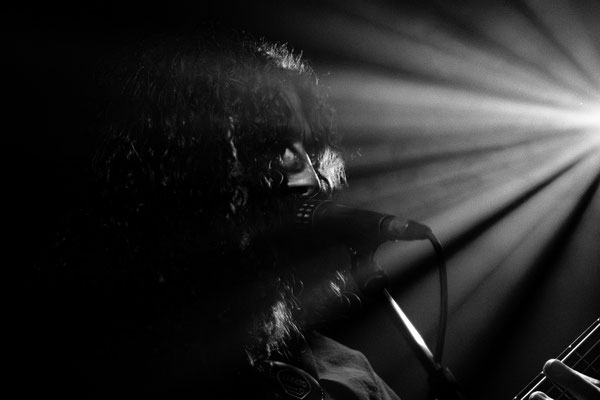
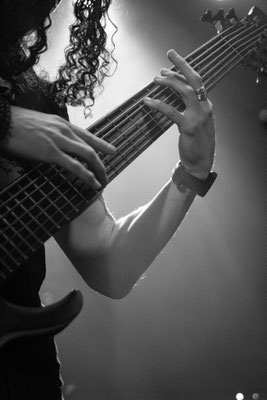
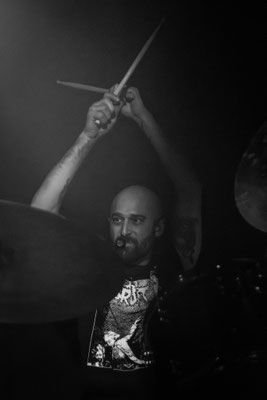


There are no grand speeches. No theatrics. No entertainment. A brief "Thanks for coming to see us"—that’s it. Stygian Bough Vol. II is performed in full. One hour of doom. One hour of sinking. One hour of everyday life receding into the background. It is over far too quickly.
Minimalism, yes—but always with carefully placed releases. The guitar solo in The Told and the Leadened deserves explicit mention. And when Moggridge isn’t singing, he occasionally steps away from the microphone—there is even the faintest hint of micro-headbanging. Funeral doom is allowed that much.
The Told and the Leadened dissolves into fuzz and feedback.
And then it’s done.
No encore. No bonus. Just the afterglow.
Did I hope for more? Of course. Did we get it? No.
Ringing ears. A fluttering chest. Minus temperatures waiting outside.
Technically, not everything was perfectly balanced.
Emotionally? Exactly right.
Turns out—Doom on Valentine's Day could not have been more perfect.