Because One Blog Wasn’t Enough: Welcome to Maladie Week
You might remember that a while ago, I wrote a blog post about Symptoms IV by Maladie.
I didn't just like it. I obsessed. And you know how I roll—if I fall for something, I fall hard. No middle ground.
So, naturally, after screaming about Symptoms IV to anyone who’d listen, I dove headfirst into the rest of their discography. Albums, EPs, saxophone madness—everything. I inhaled it all. And when I heard that the next EP, Symptoms V, was coming up? I did the most reasonable thing imaginable: messaged Björn Köppler—the mastermind behind Maladie, composer, multi-instrumentalist, and chaos architect—and asked for the promo. He said yes. Apparently I’m now the kind of person who gets trusted with unreleased music. Still not sure how that happened.
Anyway. I listened to Symptoms V. And then I thought—what if I didn't just write about the new EP?
What if—we made a whole fucking week out of it?
A full breakdown.
One EP per day, leading up to the release of Symptoms V.
Because moderation is for people who know how to just enjoy things. Casually. Like normal humans.
So I messaged Björn again (I know, no shame) and asked if he’d be up for a chat. Just me being curious. Asking questions. Digging a little deeper into the plague-ridden madness. And he said yes. Again. We talked for over an hour. No formal interview, just a proper conversation. About the band. The music. The grief. The jazz. The dissonance. The why of it all.
So that’s what this week is.
Maladie Week.
A five-part descent. One EP per day, leading up to the release of Symptoms V this Friday.
A little chaos. A lot of feelings. No objectivity.
Let’s go.
Symptoms – Where It All Begins
Released in 2016, Symptoms wasn’t planned. It wasn’t planned as an EP, and definitely not as the start of a series. It was just a track—forty-one minutes long, improvised, unfolding in real time.
While recording, Björn felt it wasn't album material. Because the albums tell the big story. The full-blown affliction. The EPs? They’re the side plots. Isolated symptoms. So he didn't force it. He let it be what it was. On CD it is one sprawling, uninterrupted track. 41 minutes. Divinitas – A Journey. On Spotify, it is split into eight parts. But they were never meant to be separate.
So just ignore that and sit down for forty minutes, won't you?
Sure, I’ll Just Multitask to This
I put Symptoms on thinking I could multitask.
You know the deal. Background music. Light admin. Bit of newsletter drafting.
Didn’t even make it through the first song.
The moment the saxophone hit, my fingers stopped typing. Coffee halfway to my mouth. Breath drawn properly for the first time that day. And that was it. I knew—whatever’s coming next, whether I’ll love it or not—this bit, I’ll come back to.
That saxophone? That’s Hauke Peters. Found by Björn in some secret Facebook group for death metal veterans (peak 2000s internet weirdness). Apparently, Hauke had a profile pic with a saxophone. That was it. That's all it took. Originally just meant to be a guest spot—but then he stayed. Which makes sense. Maladie was always meant to lean weirder. More jazz. More "off".
At the beginning, Björn didn't play as many instruments as well as he does now. There were more musicians, more collaborators. Some stuck around. Some didn’t. These days, it’s mostly Björn behind the instruments. He records. Sends stuff out. Everyone else adds their parts remotely.
But if you didn’t know that, you wouldn’t know. Because Maladie never sounds like a remote studio project. It sounds like a room full of people playing at the edge of their minds.
Changes Direction Every Two Minutes. Still Makes Sense.
The music flows exactly like that. Like a group of people with nothing to prove, following the thread wherever it goes.
Part I is just instrumental. Keys and, of course, the saxophone. Tender in the most beautiful way. It lets you drift. In the best sense.
In Part II the piano trails off, synths slide in, and then comes the bass. Rumbling from below like it’s been waiting all day to speak up. Guitars follow—slow, deliberate. Drums just there to hold the frame. The whole thing builds patiently until Déhà’s vocals finally slide in. He keeps it together at first. Just teasing the edges of what’s to come.
Part III? That’s where he stops pretending. Where they all stop. The vocals get feral. We go full scream. Blast beats. The saxophone starts throwing in chaos bursts. Guitars go sharp. And then suddenly we’re in classic heavy metal vocal territory again and then there are clean vocals. With dreamy riffs and deer-bone percussion. You don’t expect it. But it fits. Maladie doesn’t ask for permission to change course. They just do. And somehow, it never breaks. The whole track shape-shifts like this. Fury one moment, melancholy the next.
In Part IV, we’re back in blast beats and screams, but the guitars still float—light, melodic, keeping the pain from getting too heavy. Then it drops again. Stripped back. Saxophone gliding underneath, followed by a guitar solo that’s both self-assured and strangely understated. Like—here. Feelings. In guitar form.
Part V gets playful. We’ve got tandem vocals—classic heavy metal singing paired with raspy growls underneath. They run side by side for a bit, nice and harmonic, until the harsh vocals step forward and things get just a bit unhinged. Then it dips. The song stretches out—synths take over, guitars wander. It’s atmosphere now. Not lost, just floating.
And then we’re back. Clean vocals. Harmonies. Female voices in the background. And Déhà doing what he does best: singing just enough to make you fall in love a little, and then—of course—screaming just enough to tear right through it again. It's a lot. And it works.
The transition into Part VI happens mid-scream. The rhythm lurches forward—blast beats now, full throttle—and we’re in one of the bleakest, most beautiful stretches of the whole piece. It’s all just right. Screams that land too close to the bone. No mercy.
Part VII takes everything and turns it up. All the voices. All at once. Clean. Raspy. Female. Male. It’s glorious. Just this massive wall of sound—blast beats, keys, saxophone—each instrument pulling in its own direction, but somehow holding together. There’s so much going on, it’s hard to latch on to anything. You can try to pull apart the threads—really focus and follow each layer. Or you can just let it wash over you. Let it bury you.
It’s completely unhinged. And completely deliberate. And I love it.
Eventually the noise falls back and something new emerges. A duet. He speaks in French. She repeats in English. The same questions. This is the peak. The confrontation the entire track has been building toward. And when you think it’s done—the piano returns. And cello. And it’s just—stillness. Devastatingly beautiful stillness. The after. The exhale. Melancholy, distilled. One last breath.
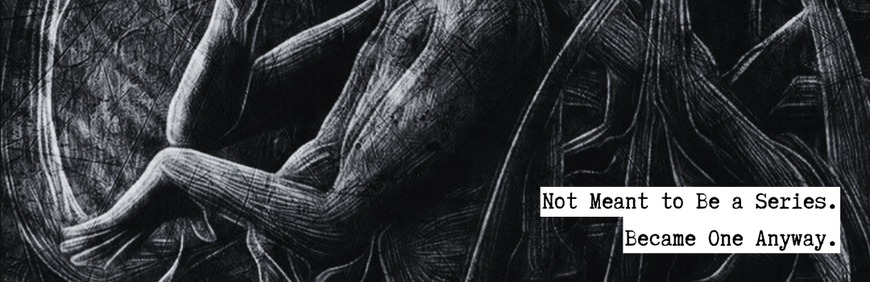
Not Meant to Be a Series. Became One Anyway.
That’s the formula, really. Chaos, release, beauty, back to chaos. Spoken word, blast beats, bass that growls, saxophone that croons—and an unwavering refusal to care about what’s expected.
Symptoms wasn’t meant to be the start of a series. But it was. A one-track detour that opened the door to all the others.
And tomorrow, we follow that door further—into Symptoms II. Same time, same place. Maladie Week continues.
